Indoor golf is growing fast across Pennsylvania, Philadelphia, and New Jersey. Franchises like Golf Envy are expanding because the business model works. It blends technology, entertainment, and training into one scalable concept.
Customers want flexibility. They want to play after work. They want consistent conditions. They want a realistic feel without worrying about weather. That demand is driving steady growth in golf simulators for indoor use.
As a commercial general contractor in Pennsylvania, we see how this model translates into repeatable construction projects with strong long-term value.
Outdoor golf depends on seasons. Indoor golf does not. Rain, snow, or early sunsets do not slow business.
An indoor golf business can operate year-round with memberships, leagues, hourly rentals, and private events. Customers use the space as a golf practice simulator during the week and as entertainment on weekends.
Industry data supports this growth. The National Golf Foundation reports continued expansion in off-course golf participation, including simulator play (National Golf Foundation, https://www.ngf.org). The PGA of America also highlights increasing interest in technology-driven golf training environments (PGA of America, https://www.pga.com).
This mix of entertainment and skill development creates stable demand.
Modern customers expect accurate feedback. They want detailed ball flight tracking. They want reliable data from the moment the ball is struck. They want to see how the ball was launched and how it carried.
That is why professional commercial golf simulator setups matter. The equipment must integrate cleanly into the space. The golf simulator bay layout must allow full swings without restriction. Ceiling height and depth must be planned carefully.
When people research commercial indoor golf simulator prices, they often focus on the hardware. But layout and construction quality directly affect performance. Poor coordination can limit swing clearance or disrupt projection alignment.
Precision matters.
Franchise expansion depends on repeatability. A concept that works in one town must work in another.
Indoor golf centers follow a proven layout pattern:
The space requirement and ceiling height are critical from day one. Clear planning reduces risk and supports predictable outcomes.
As a tenant fit-out contractor in Pennsylvania, we focus on organized project approach, careful permit planning, and tight project coordination. Those same principles apply whether the project is in suburban Pennsylvania, handled by a commercial general contractor in Philadelphia, or managed by a New Jersey commercial general contractor in a nearby market.
Regional experience reduces delays. Code-aware construction protects the schedule.
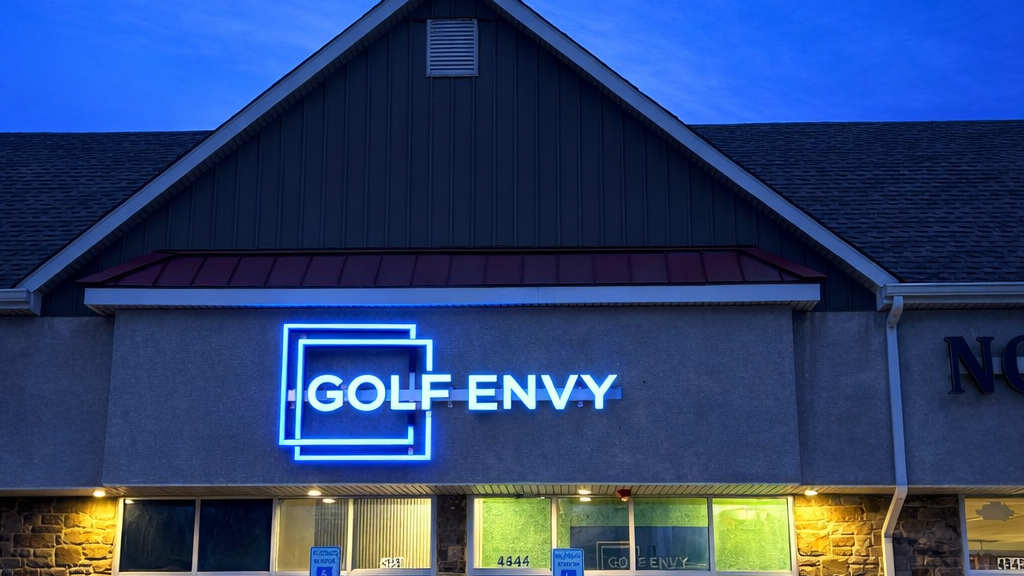
We recently completed the Golf Envy location at 4949 Swamp Rd in Doylestown, PA.
2025-10-02_GE_DoylestownPA_Perm…
This was a full interior tenant fit-out designed around the Golf Envy brand and simulator requirements. The permit set references GolfZon specifications for the simulator system and notes that the contractor must comply with the most current GolfZon guidance.
2025-10-02_GE_DoylestownPA_Perm…
The build required precise platform construction, ceiling coordination, and layout alignment to support the GolfZon system. Simulator bay locations, overhead coordination, and interior framing had to match performance standards.
Beyond the simulator integration, the project included durable flooring systems, impact-resistant wall finishes, and clean interior detailing designed for heavy use. Indoor golf venues see constant foot traffic and repeated swings. Finishes must perform.
Our team delivered:
The result is a clean, organized space built around performance and brand consistency.
Owners exploring golf simulators prices often focus on equipment investment. That is important. But the surrounding build-out determines how the facility functions over time.
Strong trade partner coordination reduces errors. Quality control standards reduce rework. Boots-on-the-ground supervision supports detail-oriented execution.
Indoor golf projects require:
A licensed and insured contractor with a seasoned construction team helps deliver predictable outcomes.
Franchises expand when construction supports the business model, not when it slows it down.
The growth of indoor golf is not random. It is tied to customer behavior. People want flexible recreation options. They want training tools. They want a social environment that feels premium.
With accurate simulator technology like GolfZon and disciplined construction planning, brands like Golf Envy can replicate success across multiple markets.
From Doylestown to Philadelphia to New Jersey, indoor golf venues are positioned for long-term relevance. When the build is done right the first time, the space performs as intended and supports repeat-client driven growth.
That is why franchises like Golf Envy are expanding. The concept works. The demand is real. And well-executed construction makes it sustainable.